Key civic action: October 1 to April 1

Find and clear Siberian elm deadwood

The bark beetle that carries DED overwinters in dead Siberian elm wood and hatches in spring. Clearing that deadwood before April 1, 2027 is the most useful thing Edmontonians can do right now.

Why this matters

Siberian elms are a critical factor in DED
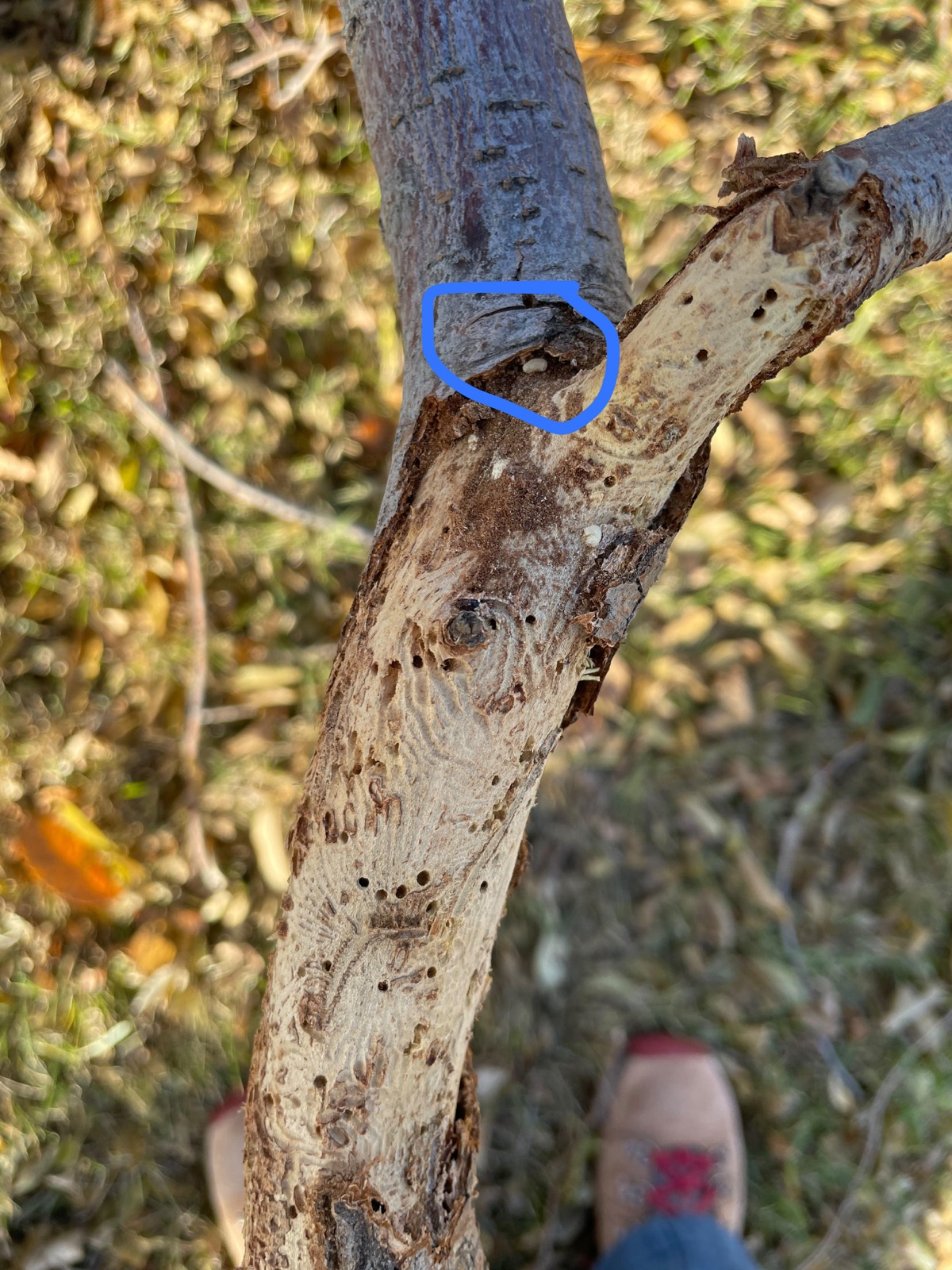
A dead elm branch with the bark peeled back, showing beetle exit holes and galleries carved in the wood
Banded elm bark beetle larvae found in dead Siberian elm wood.

American elms tend to be the big boulevard trees on Edmonton streets and in City parks, and they die from DED. Edmonton has over 90,000 public American elms.

Siberian elms tend to be resistant to DED, but their deadwood is where the bark beetle that spreads the disease overwinters and breeds. The larvae hatch in spring and fly to American elms. Edmonton has about 3,800 public Siberian elms.

Important

Clearing Siberian elm deadwood before April 1 removes the beetles before they can hatch, spread to American elms and cause widespread DED.

How to identify · Winter

Bud shape

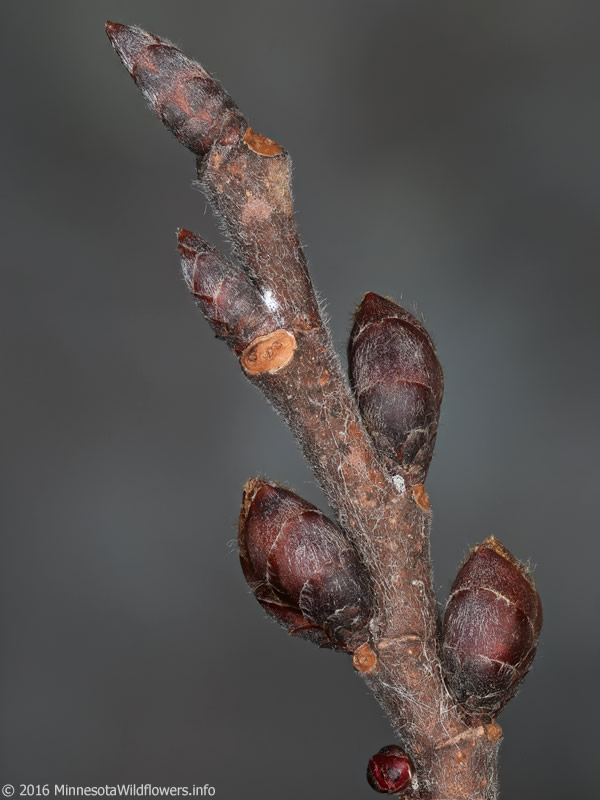
Buds are the best way to tell elms apart in winter. Buds that look like round peppercorns indicate a Siberian elm, whereas buds that are a pointed oval shape indicate an American elm.
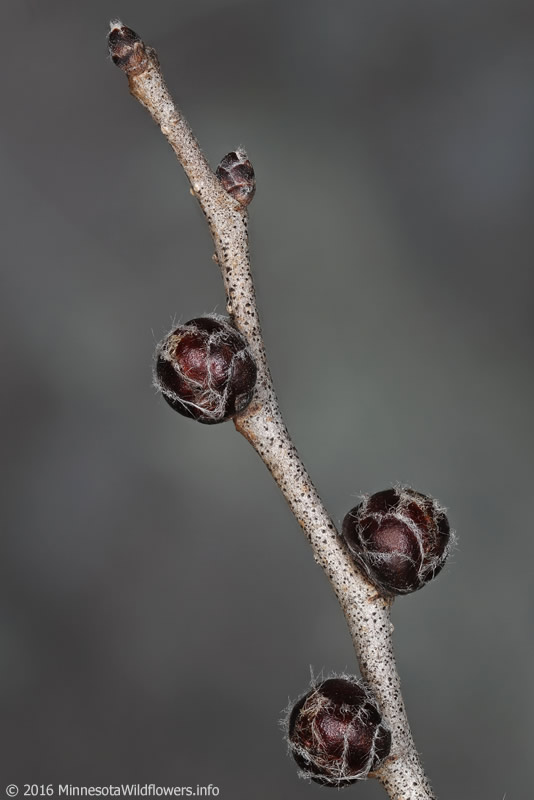
Close-up of a thin grey Siberian elm twig with three small, round, dark buds like peppercorns5 mm

Siberian elm

  • Round, like a peppercorn, with a flaky outer layer and hairy scale edges.
  • Tiny: about 3 mm, dark purple-brown to nearly black.
  • Twigs are thin, pale grey and brittle. Broken, dead twigs are common.
Close-up of a stout brown American elm twig with oval, pointed, reddish-brown buds with overlapping scales5 mm

American elm

  • Oval with a pointed tip, with neat overlapping scales like a tiny pine cone.
  • Larger: roughly twice the size, reddish-brown.
  • Twigs are stouter and often slightly hairy, zig-zagging from bud to bud.

How to identify · Summer

Leaf shape and size

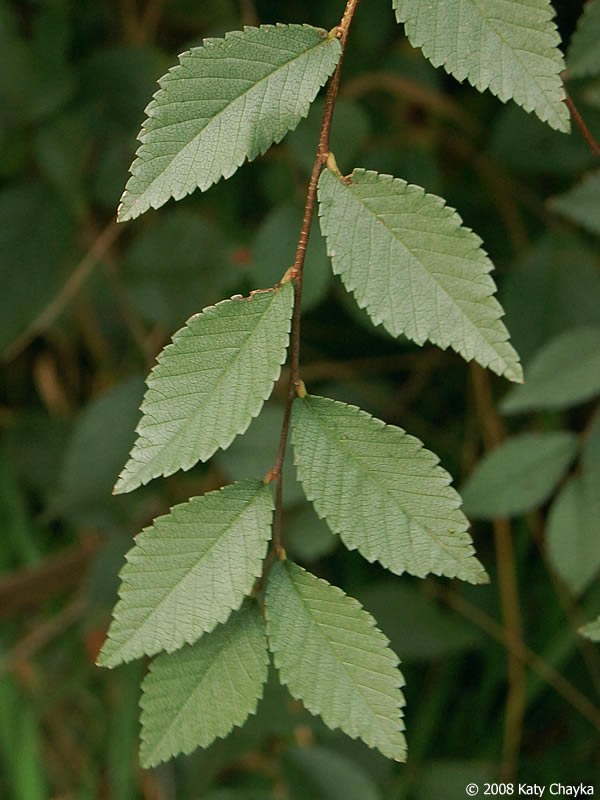
In summer, leaf size is the quickest tell. A Siberian elm leaf is the length of your thumb. An American elm leaf is as long as your hand is wide.

Siberian elm twig with a row of small, narrow, evenly toothed leaves5 cm

Siberian elm

  • Small: 2 to 7 cm long, even on a big tree.
  • Singly toothed edge: one neat, even row of teeth.
  • Nearly even base: both sides meet the stalk at about the same point.
  • Smooth and slightly glossy on top, carried on thin, wispy twigs.
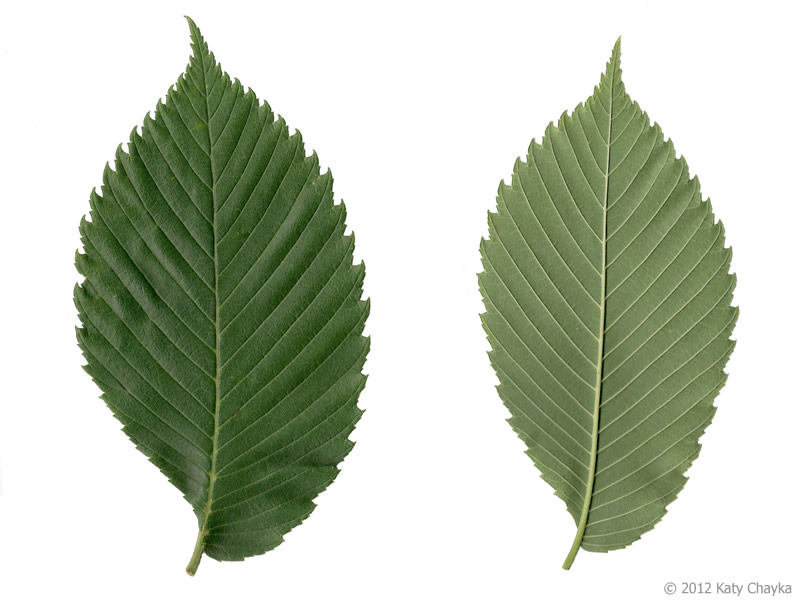
Two American elm leaves scanned flat, showing the large size, long pointed tip and doubly toothed edge5 cm

American elm

  • Large: 7 to 15 cm long, even on young trees.
  • Doubly toothed edge: each big tooth carries smaller teeth, giving a jagged, saw-on-saw outline.
  • Lopsided base: one side of the leaf joins the stalk noticeably lower than the other.
  • Rough on top: feels like fine sandpaper. Veins run straight and parallel to the edge.

Bud and leaf photos © Peter M. Dziuk and Katy Chayka, MinnesotaWildflowers.info, reproduced under their non-commercial terms.

How to identify

Siberian elm deadwood

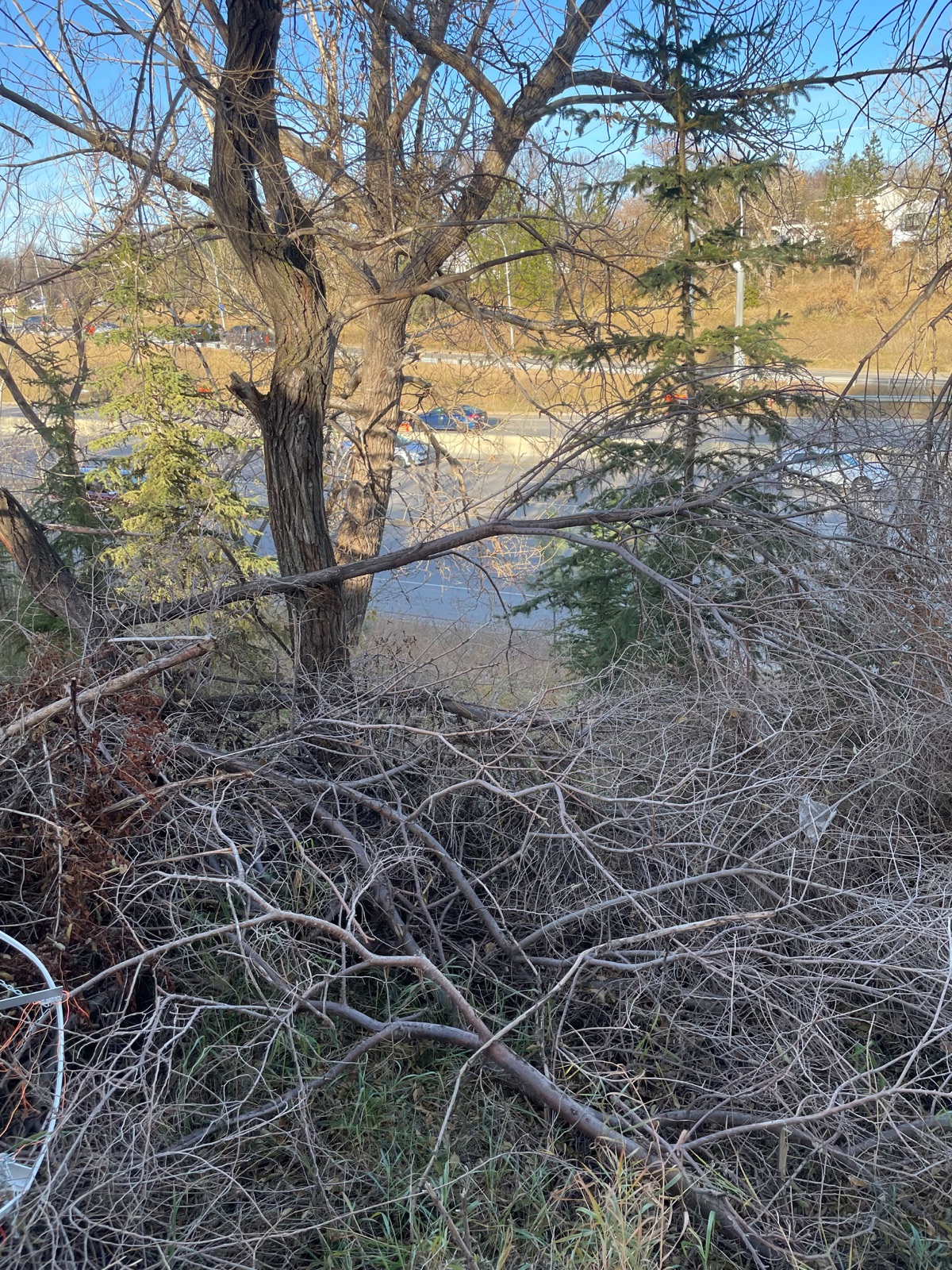
A tangle of dead Siberian elm branches in a naturalized area near Highlands, with a road behind
Dead Siberian elm wood in a naturalized area near Wayne Gretzky Drive and Highlands.

Siberian elms shed branches constantly, so most carry some deadwood. Look on the tree and on the ground beneath it.

  • Anything thicker than your pinky. Wood that size and up can shelter beetles and needs to be removed.
  • Attached. Dead branches still on the tree: no buds, bark loose or peeling, twigs that snap dry instead of bending.
  • Detached. Fallen branches and piles of elm wood under the tree, along fences and in alleys.
  • Stumps and cut elm wood left on the ground. Any elm wood with bark on it can harbour beetles.

Where to look

Where Siberian elms grow

Siberian elms seed themselves and turn up in three kinds of places.

1

Private yards

The owner is responsible for clearing deadwood and can be fined if they do not, under section 35 of the Community Standards Bylaw.

2

Boulevards and parks

Planted by the City. Most boulevard elms are American, but Siberian elms are mixed in. See the map below.

3

Naturalized areas

The river valley, ravines and roadside stands, where Siberian elms grow unmanaged and carry the heaviest loads of deadwood.

Your neighbourhood

How many elms are near you?

Public elms

Check public Siberian elms near you

Trees on private property are not included.

Loading the map…
American elm
Siberian elm
Other elms
DED case zones

Sources: City of Edmonton tree inventory · City DED protocol zone map (zone centres read from the City's map dated 2026-09-28, to about ±40 m).

Before April 1, 2027

Key actions

Deadwood needs to be cleared before April 1. Here is how you can help.

  1. 1

    Clear your own. Remove all attached and detached deadwood from Siberian elms on your property. Do not prune any elm between April 1 and September 30.

  2. 2

    Scout your neighbourhood. Walk around and look for Siberian elms carrying deadwood in yards, along fences and in alleys.

  3. 3

    Inform your neighbours. Tell them why clearing deadwood before April 1, 2027 matters, and send them this page.

  4. 4

    Scout public property. Check boulevards, parks and naturalized areas near you for Siberian elm deadwood.

  5. 5

    311 public deadwood. Report deadwood on public land by phone or the 311 app, give the location, and ask for it to be removed before April 1.

Sources: Government of Alberta, How to identify an elm tree · City of Saskatoon, Elm identification handout · Minnesota Wildflowers, Siberian elm and American elm.